
Ghosting has become one of the most common—and painful—experiences in modern digital life. One day you’re talking regularly, sharing jokes, plans, or emotional moments. The next day, silence. No explanation. No goodbye. Just… gone.
While rejection has always existed, ghosting hurts more online than offline, and that’s not just emotional exaggeration. There are real psychological and social reasons why digital silence feels deeper, sharper, and harder to move past.
Let’s unpack why ghosting online hits so hard—and why your reaction is completely normal.
Ghosting Is a Lack of Closure, Not Just Rejection
Offline rejection usually comes with signals:
- A conversation ends awkwardly
- Someone says they’re not interested
- Body language shifts
- The interaction naturally fades
Online ghosting removes all of that.
When someone disappears digitally:
- There’s no ending
- No clear reason
- No emotional resolution
The brain craves closure. When it doesn’t get it, it fills the gap with doubt, self-blame, and endless “what ifs.” This uncertainty is often more painful than a clear rejection.
The Ghosting Timeline: What Happens in Your Mind After Someone Disappears
The Ghosting Timeline
Most people assume the pain of ghosting happens instantly, but it usually unfolds in stages.
Stage 1: Confusion
The first reaction is often uncertainty. You assume the person is busy, distracted, or dealing with something temporary.
Stage 2: Investigation
You check messages, social media activity, and previous conversations looking for clues.
Stage 3: Self-Blame
Without answers, many people begin searching for mistakes they may have made.
Stage 4: Acceptance
Eventually, silence itself becomes the answer, even if no explanation ever arrives.
Understanding these stages helps people recognize that their reactions are normal rather than signs of weakness.
Why Ghosting Can Hurt More Than an Actual Breakup
Surprisingly, many people report that ghosting feels more painful than a direct breakup.
A breakup provides information. Ghosting provides uncertainty.
When someone ends a relationship openly, your brain has facts to process. When someone disappears without explanation, your mind keeps searching for answers that may never come.
Psychologists often describe uncertainty as one of the most stressful emotional states because the brain struggles to resolve incomplete stories.
The pain of ghosting is not only losing the person—it is losing the explanation.
The 3 Types of Ghosters
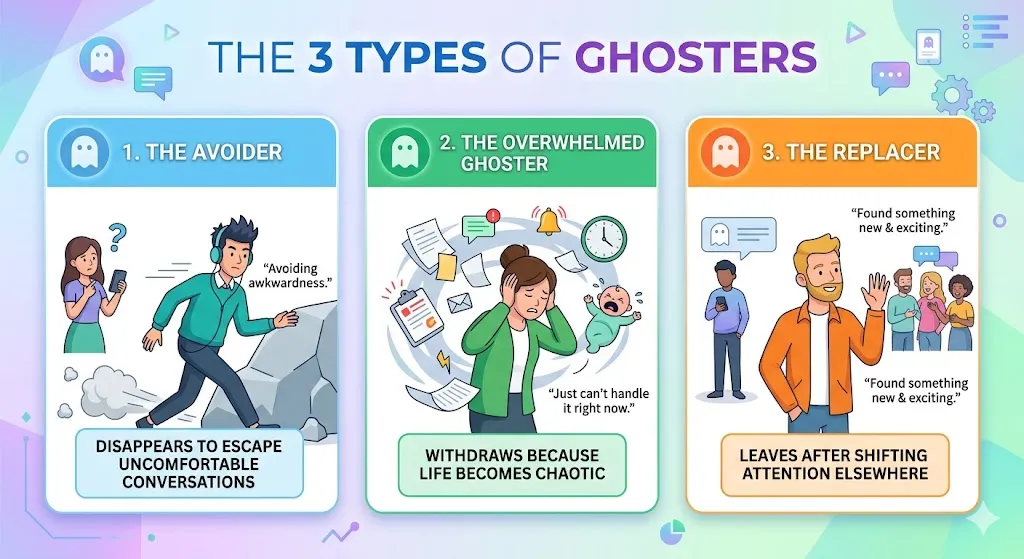
The Avoider
Disappears to escape uncomfortable conversations.
The Overwhelmed Ghoster
Withdraws because life becomes chaotic.
The Replacer
Leaves after shifting attention elsewhere.
This type of classification is highly linkable and memorable.
The Ghosting Severity Scale
Not all ghosting experiences carry the same emotional impact.
Level 1: Casual Ghosting
A short conversation ends without explanation.
Level 2: Consistent Communication Ghosting
Someone you spoke with regularly suddenly disappears.
Level 3: Emotional Connection Ghosting
A person with whom you shared personal experiences cuts contact unexpectedly.
Level 4: Relationship Ghosting
A romantic partner vanishes without closure.
Level 5: Life-Impact Ghosting
A close friend, family member, or business partner disappears, creating emotional and practical consequences.
The deeper the emotional investment, the greater the psychological impact of the ghosting experience.
The Brain Interprets Silence as a Threat
From a psychological standpoint, ghosting activates the same brain regions associated with social pain and even physical pain.
Why?
- Humans are wired to seek connection
- Sudden disappearance triggers abandonment fear
- The brain treats silence as danger or exclusion
Online silence is especially powerful because it’s ambiguous. You don’t know if:
- You did something wrong
- They lost interest
- They found someone else
- They’re ignoring you intentionally
Ambiguity is emotionally exhausting—and emotionally damaging.
Online Connections Feel Constant (Until They Aren’t)

Digital communication creates the illusion of constant presence:
- Notifications
- Messages
- Reactions
- Daily check-ins
When that flow suddenly stops, the contrast is extreme.
Offline, distance exists naturally. Online, silence feels deliberate.
Your brain goes from:
“They’re always here”
to
“They vanished completely”
That sudden drop creates emotional whiplash.
Ghosting Attacks Self-Worth
One of the hardest parts of being ghosted online is how personal it feels.
Because digital communication is often one-on-one and direct:
- The silence feels targeted
- The absence feels intentional
- The rejection feels like a judgment of your value
Without an explanation, many people internalize the experience:
- “I wasn’t interesting enough.”
- “I said the wrong thing.”
- “I wasn’t worth a goodbye.”
Offline rejections usually involve context. Online ghosting removes context entirely—leaving your mind to assume the worst.
The Always-Online Factor Makes It Worse
One cruel detail of online ghosting is visibility.
You may see:
- The person active online
- Posting stories
- Liking content
- Interacting with others
This creates a painful contradiction:
“They’re online… just not talking to me.”
Offline, absence is easier to accept. Online, presence without connection feels like intentional exclusion, even when it may not be.
Ghosting Triggers Overthinking Loops
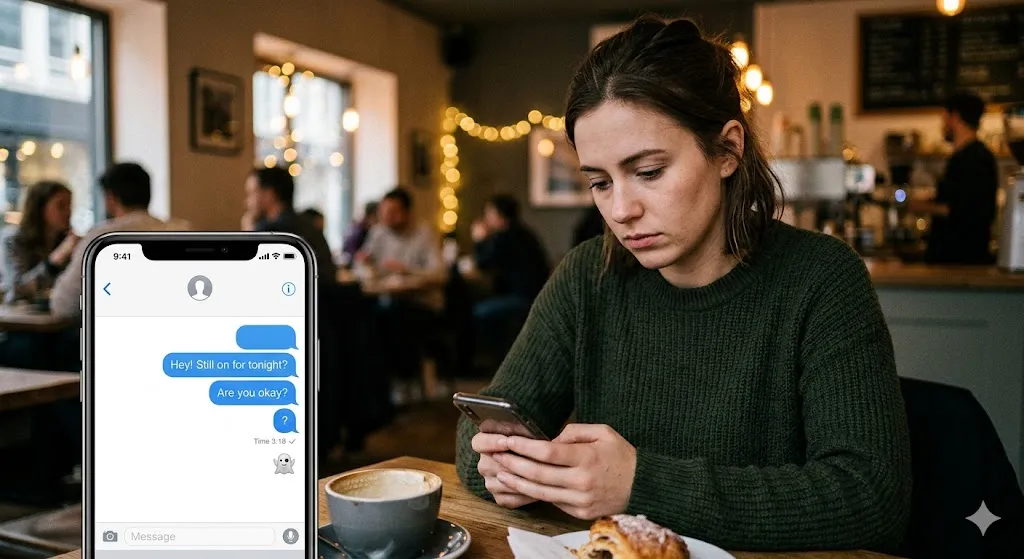
Online ghosting feeds overthinking because it leaves the story unfinished.
People replay:
- Messages
- Timing
- Emojis
- Last conversations
This mental loop can last far longer than the relationship itself.
The brain keeps searching for meaning because it never received a clear ending. Offline, time and physical distance help the brain move on. Online, everything stays visible and unresolved.
Digital Communication Feels Safer—Until It Breaks
Ironically, online connections often feel emotionally safer at first:
- Less pressure
- More control
- Easier vulnerability
That sense of safety makes ghosting feel like a betrayal, even if no promises were made.
The emotional investment happens quietly and quickly. When it ends without warning, the pain feels disproportionate—but it’s rooted in genuine attachment.
Why People Ghost More Online

Understanding why people ghost doesn’t excuse it—but it explains the pattern.
Common reasons include:
- Avoiding confrontation
- Emotional immaturity
- Overwhelm or burnout
- Fear of difficult conversations
- Treating connections as disposable
Digital platforms make disappearing easy. No awkward conversations. No accountability. Just silence.
Social Media Keeps Ghosts Alive
In previous generations, people disappeared from daily life more completely.
Today, someone can stop speaking to you while continuing to appear in your digital world.
You may still see:
- New photos
- Status updates
- Comments
- Likes
- New relationships
This creates what psychologists sometimes call partial presence—a situation where someone is absent from your life but still visible enough to prevent full emotional closure.
In many cases, seeing occasional reminders prolongs recovery more than complete separation would.
The Digital Rejection Paradox
Technology has made communication easier than at any point in human history.
Yet this convenience has created a strange paradox: because sending a message takes only seconds, silence feels more intentional than ever before.
When communication required letters, travel, or phone calls, delays were normal.
Today, most people know that a message can be answered almost instantly.
As a result, unanswered communication often feels less like absence and more like active rejection—even when the reality may be more complicated.
This paradox helps explain why ghosting can feel uniquely painful in the digital age.
What to Do When Ghosted by People Who Matter
Being ghosted by someone who owes you money, is a family member, or a romantic partner can feel far more serious than casual online ghosting. In these situations, the silence can have real-life consequences, from financial stress to emotional hurt. The best approach is to stay calm and document your interactions, especially if money or commitments are involved.
For family or romantic relationships, try to reach out with clear, respectful communication before assuming the worst—sometimes life circumstances, not malice, cause the disappearance. At the same time, set boundaries to protect your well-being: repeated avoidance or lack of response may signal that it’s time to limit your emotional investment until accountability or dialogue is restored.
Does Ghosting Hurt More in Dating, Friendship, or Family Relationships?
Ghosting affects different relationships in different ways.
| Relationship Type | Common Emotional Impact |
|---|---|
| Dating | Rejection and self-doubt |
| Friendship | Betrayal and confusion |
| Family | Abandonment and grief |
| Business | Frustration and distrust |
| Online Communities | Isolation and exclusion |
The emotional response often depends less on the length of the relationship and more on the level of trust involved.
Why Ghosting Rarely Means What You Think It Means
One of the most important truths about ghosting:
It usually says more about the person who ghosts than the person who was ghosted.
Often, ghosting is about:
- Conflict avoidance
- Poor communication skills
- Emotional unavailability
It’s rarely a detailed judgment of your worth, personality, or value—even though it feels that way.
The Ghosting Recovery Curve
| Time After Ghosting | Common Emotion |
|---|---|
| Day 1-3 | Shock |
| Week 1 | Investigation |
| Week 2 | Self-Blame |
| Month 1 | Acceptance |
| Month 2+ | Detachment |
Ghosting Vulnerability Checklist
You may feel ghosting more intensely if:
- You frequently seek closure.
- You replay conversations in your mind.
- You struggle with uncertainty.
- You become emotionally attached quickly.
- You check social media for updates.
- You rely heavily on digital communication.
The more boxes you check, the more likely ghosting will trigger prolonged overthinking and emotional distress.
How Not to Get Ghosted: Honesty Over Tricks
Trying to avoid being ghosted by lying, pretending, or over-managing your image usually backfires. While it might create short-term interest, dishonesty often leads to disappointment or mistrust later—and can even trigger the very ghosting you’re trying to prevent. The healthiest approach is authentic communication: be clear about your intentions, set realistic expectations, and show genuine interest without over-investing too soon.
Paying attention to red flags, pacing conversations naturally, and maintaining your own boundaries also reduces the likelihood of being ghosted. Ultimately, honesty and respect—both for yourself and the other person—are the best defenses against digital silence.
How to Mentally Protect Yourself from Online Ghosting
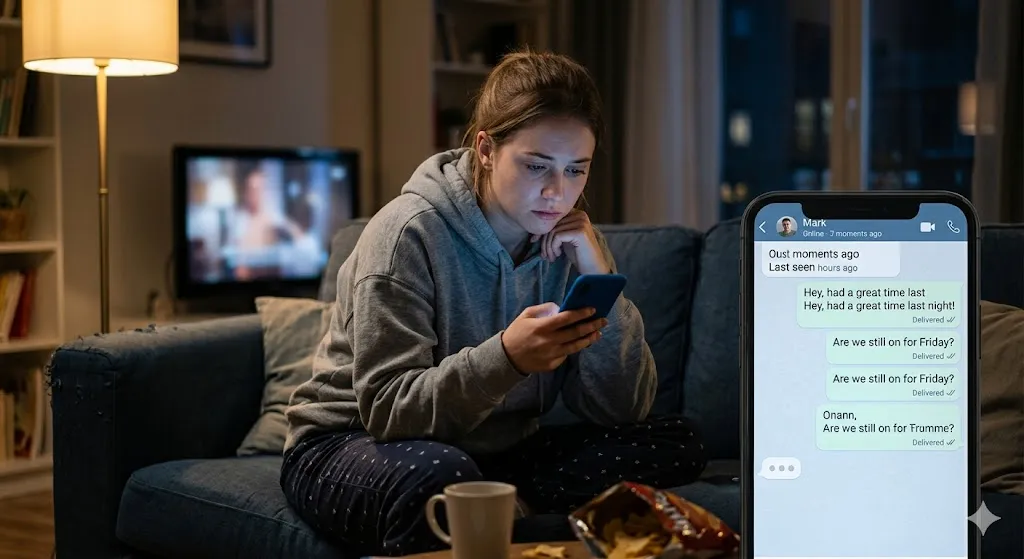
While ghosting can’t always be prevented, its impact can be softened.
Helpful mindset shifts:
- Silence is an answer—even if it’s a bad one
- Lack of explanation is not proof of your flaws
- Closure doesn’t always come from the other person
- Someone who disappears easily would struggle with deeper connection anyway
Reframing ghosting as a filter, not a failure, can reduce long-term emotional damage.
Is It Good to Ghost Back After Being Ghosted?
Ghosting back can feel like taking your power back, but it isn’t always the healthiest response. When someone disappears without explanation, mirroring their behavior may give short-term emotional relief, yet it often keeps you stuck in the same cycle of silence and unresolved feelings. In many cases, choosing not to ghost back—and instead deciding how you want to close the interaction—can be more empowering.
This might mean sending one clear, calm message to set boundaries, or consciously letting go without chasing or retaliating. The key is intention: ghosting back out of hurt prolongs frustration, while choosing silence or closure on your own terms helps you regain emotional control and move forward with clarity.
The Psychological Consequences of Being Ghosted
Being ghosted can have real psychological effects that go beyond temporary disappointment. The sudden disappearance of someone you were emotionally invested in can trigger feelings of rejection, self-doubt, and anxiety, often leading the brain to overanalyze every interaction. People who are ghosted may experience a heightened sense of social pain, similar to physical pain, because humans are wired to seek connection and belonging.
Over time, repeated experiences of being ghosted can erode trust, make future online interactions feel riskier, and even affect self-esteem. Understanding these consequences can help you recognize that your emotional response is natural—and taking proactive steps, like reflection or talking it through with friends, can reduce the lasting impact.
Final Thoughts
Ghosting hurts more online than offline because it combines sudden loss, ambiguity, silence, and self-doubt—all in an environment where connection feels constant and personal.
If you’ve been ghosted, your reaction isn’t weakness. It’s human psychology responding to unresolved social pain.
In a digital world where disappearing is easy, choosing clarity, honesty, and communication is rare—and valuable.
And sometimes, being ghosted is simply life removing someone who wasn’t capable of staying.
Leave a Reply