
Something fundamental is shifting beneath the surface of the internet, and most website owners have not yet fully grasped what it means for their digital presence. For nearly three decades, search engine optimization operated on a relatively stable set of principles. Google returned a list of blue links. Users clicked the most appealing one. Websites competed for position on that list through a combination of content quality, technical optimization, and link authority. The rules changed constantly at the margins — algorithm updates, new ranking factors, shifting best practices — but the underlying model remained the same. A search happened. A list appeared. A click occurred.
That model is now being dismantled and rebuilt from the ground up.
The rise of AI-powered search — Google’s AI Overviews, Microsoft’s Copilot integration in Bing, ChatGPT’s Browse with Bing, Perplexity AI, and the wave of AI search tools that have followed — represents not an incremental update to how search works but a categorical shift in what search is. The implications for every website owner, content creator, marketer, and business that depends on organic search traffic are profound, wide-ranging, and in many cases poorly understood.
This article is an attempt to change that. Not to predict with false precision what the future of SEO will look like — nobody knows that yet, including the companies building these systems — but to clearly explain what is happening, why it matters, what the evidence already shows about how user behavior is changing, and what strategies give websites the best chance of remaining visible and relevant in a world where AI increasingly stands between the searcher and the source.

What AI Search Actually Is and How It Works
Before discussing the implications, it is worth being clear about what AI search actually means, because the term covers several distinct phenomena that are often conflated.
The first and most widely deployed form is the AI-generated answer displayed prominently at the top of traditional search results. Google calls this AI Overviews — a feature rolled out broadly in 2024 that uses Google’s Gemini AI to synthesize an answer to a search query from multiple sources and display it directly in the search results, above the traditional blue links. The user gets an answer without necessarily clicking anything. The sources used to generate the answer are cited, sometimes, in a sidebar or below the generated text.
The second form is the conversational AI search engine — tools like Perplexity AI, ChatGPT with web browsing enabled, and Microsoft Copilot — that operate as an alternative to traditional search entirely. Users type a question or a complex query, the AI searches the web, synthesizes information from multiple sources, and returns a conversational answer with citations. The experience is closer to asking a knowledgeable assistant than to consulting a list of documents.
The third form, still emerging, is the AI agent that performs multi-step research tasks autonomously — not just answering a single query but breaking a complex request into sub-tasks, searching across multiple sources, synthesizing findings, and presenting a comprehensive output. Google’s Project Astra and various autonomous agent tools represent early iterations of this capability.
All three of these forms share a common implication for websites: the click, which has historically been the primary mechanism through which search generated value for publishers, is becoming optional. If the AI can synthesize and deliver the answer, the user may never need to visit the source.
The Click-Through Rate Crisis Is Already Here
The most immediate and measurable consequence of AI search is a decline in click-through rates from search results to websites — particularly for informational queries where an AI-generated answer can adequately serve the searcher’s need without requiring them to visit a source.
Data from multiple SEO research firms in 2024 showed significant declines in organic click-through rates for queries that trigger AI Overviews. Studies found that click-through rates for positions one through three in traditional results dropped substantially when an AI Overview appeared above them. For some categories of informational queries — simple factual questions, definitions, how-to queries with brief answers, comparison questions — the AI Overview effectively absorbs the search demand that would previously have generated clicks to publisher websites.
This is not a marginal effect. For websites that built significant traffic around answering common informational questions — a strategy that was entirely rational under the old search paradigm — the shift represents an existential challenge to their traffic model. Health information sites, general advice blogs, recipe aggregators, financial explanation sites, and similar properties built on high-volume informational queries are among the most exposed.
The pattern is consistent with what happened when Google introduced featured snippets years earlier, but at a dramatically larger scale and with a far more complete answer generation capability. A featured snippet showed a paragraph from a source and linked back to it. An AI Overview synthesizes information from multiple sources and may satisfy the query so completely that no click is necessary or desired.
For website owners still operating under the old model — producing informational content targeted at high-volume queries and depending on those queries generating clicks — this is the most urgent issue in SEO right now.
AI Search Visibility Audit (2026)
Ask yourself these questions:
- Does my content contain original research, surveys, or proprietary data?
- Can an AI system easily identify the author and their expertise?
- Does every article answer a specific question clearly within the first 100 words?
- Have I included statistics, examples, case studies, or unique insights unavailable elsewhere?
- Does my content earn citations from reputable websites?
- Is my brand mentioned outside my own website?
- Would an AI assistant have a reason to cite my page instead of 20 similar articles?
If the answer is “no” to several of these questions, your content is vulnerable to AI-generated summaries replacing it.
Which Types of Content Are Most and Least Vulnerable
Not all content is equally threatened by AI search, and understanding the distinction between vulnerable and resilient content categories is the most important strategic insight for adapting to the new environment.
The most vulnerable content is what might be called commodity informational content — articles that answer widely-known questions, explain broadly understood concepts, or aggregate publicly available information in ways that an AI can replicate or improve upon without needing to visit the source. “What is the capital of France?” “How does photosynthesis work?” “What are the symptoms of the flu?” “How to write a cover letter?” These queries have fairly definitive answers that AI systems can synthesize accurately from many sources. The incentive to click through to a specific article for this kind of information is already low and declining.
Also highly vulnerable are thin review aggregations, basic comparison articles, simple how-to guides for common tasks, and any content whose primary value is organizing publicly available information rather than adding genuine original insight or expertise. If your content could have been written by someone who read ten other articles on the same topic and synthesized them, an AI can do that job more efficiently than you can.
The most resilient content categories are those where AI synthesis cannot replicate the core value. Original research and proprietary data — surveys, studies, unique datasets, original reporting — are things that AI systems need to cite and link to because they cannot generate them. An AI can tell a user what other people have found, but it cannot conduct a new study or produce original findings. Websites that produce genuine original research will see that content cited by AI systems rather than replaced by them.
First-hand experiential content is another resilient category. A detailed account of someone’s actual experience renovating a specific house, navigating a specific medical condition, building a specific software product, or living in a specific place carries a quality of specific, personal, contextual detail that AI systems cannot generate — because the AI was not there. This is precisely what Google’s E-E-A-T framework with its emphasis on “Experience” is designed to reward, and it maps directly onto what AI search systems cannot replicate.
Expert opinion and analysis — genuine intellectual work that interprets, argues, and draws non-obvious conclusions from evidence — is another resilient category. An AI can summarize the arguments that experts have made, but it cannot generate the original argument itself with the same authority and originality as the human expert making it. Commentary, criticism, and analysis that represent a genuine point of view rather than a synthesis of existing views maintain their value in an AI search environment.
Community and interactive content — forums, comment sections, user-generated Q&A, real-time discussion — is inherently beyond AI synthesis because it is continuously generated by human interaction. Reddit’s dominance in AI-era search results is not coincidental. Google frequently surfaces Reddit threads in its results because they represent the kind of authentic, real-time human discussion that no AI-generated answer can replicate.
Finally, locally specific and hyper-niche content — information about specific local businesses, highly specialized technical topics, content in languages or dialects with limited AI training data — remains resilient because AI systems either lack the data to address it adequately or are less competitive at the extreme edges of specialization.
Google’s Complicated Position and What It Means for Publishers
Google finds itself in a genuinely difficult position with AI search, and understanding that difficulty helps explain the sometimes inconsistent and confusing signals the company has sent to publishers and SEO professionals.
On one hand, Google needs to evolve its search product to compete with the new generation of AI search tools. If users find that ChatGPT or Perplexity gives them better answers to their questions than Google Search, they will shift their search behavior — and Google’s advertising revenue, which is almost entirely dependent on search, goes with them. The imperative to build AI Overviews and develop conversational search capabilities is existential for Google as a business.
On the other hand, Google’s search product depends on the existence of a rich ecosystem of publisher websites that produce the content its AI systems synthesize. If AI Overviews reduce traffic to publishers enough that publishers can no longer sustain their content production, the quality of the information available for Google to synthesize degrades. Google cannot synthesize valuable answers from low-quality sources, and the destruction of the publisher ecosystem that produces high-quality sources ultimately undermines the quality of Google’s own AI answers.
This tension explains why Google has been simultaneously aggressive in deploying AI Overviews and careful to include source citations, why it has made various commitments to the news industry about maintaining click-through traffic, and why its messaging to publishers has been inconsistent. The company is genuinely navigating a difficult balance between competitive necessity and ecosystem sustainability, and it has not yet found a stable resolution to that tension.
For publishers, the practical implication is that Google is unlikely to abandon citations and source attribution in its AI systems — doing so would both reduce the quality of its answers and accelerate the destruction of the publisher ecosystem it depends on. But citation does not guarantee meaningful traffic, and the relationship between being cited by AI Overviews and receiving actual clicks is complex and evolving.
The Rise of Zero-Click Search and What Publishers Can Do About It
Zero-click search — search queries that are resolved without the user clicking through to any website — is not new. Featured snippets, knowledge panels, and direct answer boxes were already producing zero-click results for many queries before AI Overviews arrived. But AI search dramatically expands both the range of queries that can be resolved without a click and the comprehensiveness of the answer that can be delivered in the search interface itself.
The strategic response to zero-click search for publishers is not to resist the trend — that is neither possible nor productive — but to restructure their content strategy around the types of value that cannot be delivered in a zero-click experience.
Building an email list is the most direct and durable response. A subscriber who has chosen to receive your content directly is completely insulated from changes in how Google displays search results. The email relationship is not mediated by a search engine algorithm, an AI synthesis layer, or a platform’s content policy. For publishers building genuinely loyal audiences around specific expertise areas, email remains the most valuable owned channel in an increasingly uncertain organic search environment.
Creating content that requires depth and engagement to deliver its value is another response. A comprehensive, multi-part guide that walks a reader through a complex process step by step cannot be adequately summarized in an AI Overview because the value is in the completeness and the progression, not in the summary. Interactive tools, calculators, templates, and resources that require active use rather than passive reading are similarly immune to summarization.
Building brand recognition strong enough that users search for you by name rather than by topic is perhaps the most powerful long-term response. When a user searches “Wirecutter headphone review” rather than “best headphones,” they are expressing a preference for your source specifically, not just for the category of information you provide. Brand search is something AI Overviews cannot divert — if someone is specifically looking for your content, they will find and click on your content. Building this kind of brand preference is difficult and slow, but it creates a type of search traffic that is genuinely resilient to AI disruption.
AI as Content Creator: The Quality Paradox

The same AI technology that is changing how users find content is also being used by many publishers to create content at unprecedented scale and speed. The combination of these two trends creates what might be called the quality paradox of AI-era SEO: at the precise moment when Google is raising its standards for content quality and genuine expertise in response to AI-generated content flooding the web, the tools to produce low-quality content at enormous scale have become freely available to everyone.
The result is a race to the bottom in content quality at the commodity level, combined with a simultaneous increase in the value of genuine quality at the top. Publishers who respond to the new environment by using AI to produce more content faster are likely accelerating their own obsolescence — because this is precisely the type of content that AI search systems have the least need to send traffic to, since they can synthesize it themselves.
Google has explicitly acknowledged this dynamic. Its helpful content updates and quality rating guidelines increasingly emphasize signals of genuine human expertise, first-hand experience, and original insight. The sites that thrive in AI search are not those that produce more content but those that produce better content — content that reflects real expertise, real experience, and real care for the reader’s specific needs.
This does not mean AI tools have no role in content production. AI assistants can help with research, drafting, editing, and structure. But the human expertise, judgment, original thinking, and genuine experience that differentiate high-quality content from commodity content cannot be delegated to AI and expect to be rewarded by AI search systems that are specifically calibrated to detect and prefer those qualities.
How to Get Cited by AI Search Systems
As AI search systems become more prominent, a new metric is emerging alongside traditional rankings: AI citation — whether your website is cited as a source by AI systems when they generate answers to relevant queries. Being cited in an AI Overview or by Perplexity AI is a new form of search visibility that is distinct from traditional ranking position and may be more valuable in some contexts.
The characteristics of content that tends to get cited by AI systems reveal something important about what these systems are optimizing for. They prefer content that is authoritative, specific, and clearly attributed to recognized expertise. They prefer sources that have established credibility signals — not just backlinks but brand recognition, professional credentials, institutional affiliation, and citation by other credible sources. They prefer content that directly and clearly answers specific questions, with factual claims that can be attributed and verified.
Original data, studies, and research are cited by AI systems at a rate that is disproportionate to their search traffic share, because AI systems need sources for factual claims and prefer sources that represent original information rather than synthesis. A publisher that conducts and publishes original research — surveys, experiments, datasets, case studies — creates content that AI systems need to reference in ways that they do not need to reference explanatory or advice content.
Structured content that directly and explicitly answers specific questions tends to get pulled into AI responses more readily than long-form prose that buries its key points. Clear, declarative sentences that state specific facts, findings, or recommendations are more tractable for AI synthesis systems than nuanced, heavily qualified, or conversational prose. This does not mean content should be simplistic — but it should be organized in a way that makes its key claims explicit and clearly attributable.
Building genuine expertise signals across the web — not just on your own site but through contributions to recognized publications, professional profiles, speaking engagements, and citations by other credible sources — increases the probability that AI systems will recognize and cite your site as an authoritative source in your domain.
Technical SEO in the AI Era: What Changes and What Stays the Same
The technical foundations of SEO do not disappear in the AI era — they become more important in some areas and less important in others.
Structured data markup — schema.org vocabulary that explicitly labels the type and meaning of content on a page — becomes more important as AI systems use it to more accurately understand and categorize content. FAQ schema, HowTo schema, Article schema, Review schema, and specialized schemas for specific industries all help AI systems accurately parse and represent your content. This is not a new recommendation but its importance is growing.
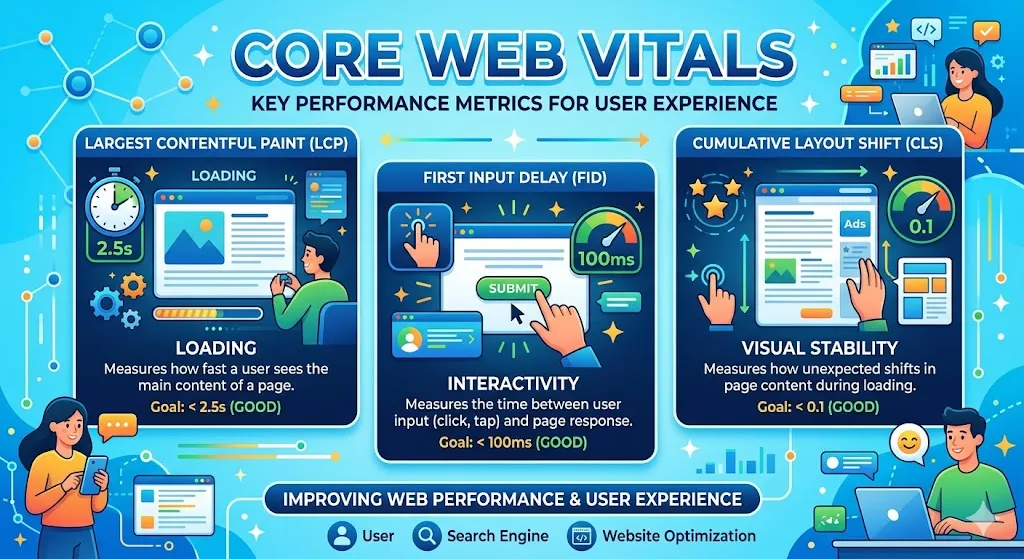
Page experience signals — Core Web Vitals, mobile responsiveness, page speed — remain important because they remain part of Google’s ranking algorithm and because AI systems that crawl the web to gather training data and current information preferentially index pages that are accessible and fast.
Crawlability and indexability — ensuring that search engine and AI crawlers can access, parse, and index your content — is fundamental and unchanged. If your content cannot be found and indexed, it cannot be cited. Some publishers have begun blocking AI crawlers in response to concerns about training data use, but this has a direct cost in AI search visibility that needs to be weighed carefully against the perceived benefit.
Site authority signals — backlinks from credible sources, brand mentions, and the overall trust signals that Google uses to evaluate source credibility — remain important in AI search for the same reasons they were important in traditional search: AI systems need ways to evaluate source reliability, and link-based authority remains one of the best available proxies for credibility at scale.
What matters less in the AI era is mechanical keyword optimization — the insertion of target phrases in specific locations, the precise matching of keyword strings, the title tag formulas that drove so much SEO activity in the traditional search era. AI search systems understand semantic meaning, not keyword matching. Content that thoroughly, clearly, and accurately addresses a topic will be found and used by AI systems regardless of whether it has been technically optimized for specific keyword phrases, as long as the fundamental discoverability requirements — proper indexing, clear topic signals, accessible technical structure — are met.
The New Metrics: Moving Beyond Traffic as the Primary Measure
One of the most important mindset shifts for website owners navigating AI search is reconsidering what success looks like. If organic traffic was previously the primary measure of SEO performance, and if AI search is structurally reducing traffic for certain content types regardless of quality, then optimizing for traffic alone increasingly means optimizing for the wrong thing.
The metrics that matter more in the AI era are those that measure audience quality, loyalty, and conversion rather than raw visitor volume. Email subscribers acquired from organic search represent a far more durable and valuable asset than page views, because the subscriber relationship persists regardless of changes in search behavior. Direct traffic — users who type your URL directly or have bookmarked your site — is a measure of brand recognition and loyalty that AI search cannot disrupt. Conversion rate from organic traffic to meaningful actions — purchases, sign-ups, inquiries, subscriptions — tells you whether the traffic you are getting is genuinely valuable, independently of how much of it there is.
For publishers whose business model has been built on advertising revenue from high page view volumes, this shift requires genuinely difficult strategic rethinking. The model of producing large quantities of informational content to capture advertising impressions is directly in the path of AI search disruption, and the appropriate response is not just tactical adjustment but a reconsideration of the underlying business model. Subscription revenue, community membership, premium content, consulting services, and products built on genuine expertise are all business models that are more resilient to AI search disruption than advertising-supported commodity content.
What the Most Resilient Publishers Are Doing Differently
Looking at the publishers and website owners who are maintaining and growing their search visibility and business performance despite the AI disruption reveals a consistent set of characteristics.
They have deep, genuine expertise in specific domains rather than broad coverage of many topics. They have built recognizable brands and loyal audiences that seek them out specifically rather than finding them interchangeably through generic queries. They produce original content — research, reporting, first-hand accounts, unique tools — that AI systems need to cite and link to. They maintain direct relationships with their audiences through email, community platforms, and regular engagement that make them less dependent on search as an acquisition channel. They update and improve their existing content regularly rather than perpetually producing new material, which means their content stays relevant and authoritative over time.
They also, in many cases, have embraced a philosophy that predates AI search but is particularly well suited to it: the idea that the purpose of a website is not to rank for keywords but to genuinely serve a specific audience so well that the audience seeks it out. This philosophy produces websites that are naturally resilient to search disruption because their value is not contingent on any particular discovery mechanism. Whether users find them through Google, through an AI citation, through a friend’s recommendation, through a newsletter, or through a direct search for the brand name, the value they provide is the same and the audience relationship is the same.
The Opportunity in the Disruption
It would be incomplete and misleading to discuss AI search purely in terms of threat and disruption. Every major shift in the search landscape has created as many opportunities as it has destroyed, and the AI era is no exception.
The collapse in competitive value of commodity informational content creates space for genuinely expert, original, deeply valuable content to stand out more clearly than ever. If AI search makes it trivially easy to get a serviceable answer to a common question, the premium on content that goes beyond serviceable answers — that provides the kind of insight, expertise, and specific practical guidance that genuinely changes how people think or act — increases dramatically.
For publishers who have been frustrated by competing against well-resourced content farms on generic topics, AI search is actually a welcome development. The content farm model — producing large quantities of decent-enough content on broadly searched topics — is precisely the type of content most disrupted by AI synthesis. Genuine expertise and original thought are not.
The expansion of AI search also expands the total population of people engaging in search-like behavior. People who would not have typed a query into Google because formulating it was too difficult now engage with conversational AI interfaces that allow them to express complex, nuanced needs in natural language. This expansion of the addressable search audience creates opportunities for publishers who can serve complex, nuanced information needs that the old keyword-based search paradigm did not surface efficiently.
Finally, the emergence of AI citation as a new form of search visibility creates a new category of optimization target. Being the most-cited, most-authoritative source in a specific domain in AI search results is a form of search visibility that is potentially more durable than traditional ranking, because it is based on recognized expertise rather than mechanical optimization — and genuine expertise is considerably harder to manufacture or replicate than keyword-optimized content.
AI SEO Predictions for 2027
- Traffic will become a secondary metric.
- AI citations will become a reporting metric.
- Brand searches will grow in importance.
- Original data will outperform informational content.
- Email subscribers will become more valuable than organic visitors.
| Likely Winners | Likely Losers |
|---|---|
| Original research sites | Generic informational blogs |
| Industry experts | AI-generated content farms |
| Community websites | Thin affiliate sites |
| Strong brands | Anonymous niche sites |
| Proprietary tools | Commodity content |
How I Would Build a New Website in the AI Search Era
- Pick a narrow niche.
- Publish first-hand experience.
- Build an email list from day one.
- Create original surveys.
- Add free tools/calculators.
- Build brand searches.
- Diversify traffic beyond Google.
AI Search Traffic Risk Assessment: Is Your Website at Risk?
One of the biggest mistakes website owners make is assuming that AI search affects all websites equally. In reality, some sites face significant traffic risk while others may benefit from the transition. The key factor is understanding how much of your content can be replaced by an AI-generated answer. Websites that rely heavily on basic informational articles, simple definitions, generic how-to guides, or content that summarizes information available elsewhere are generally more vulnerable. By contrast, sites that publish original research, first-hand experience, expert analysis, proprietary data, interactive tools, or strong community-driven content are often more resilient because AI systems cannot easily recreate their unique value.
A simple way to assess your exposure is to review your content portfolio honestly. If most of your traffic comes from answering common questions that can be summarized in a few paragraphs, your risk level may be high. If your audience visits specifically for your expertise, insights, brand reputation, or resources that cannot be replicated elsewhere, your risk level is likely lower. Consider factors such as how much original content you produce, whether users search for your brand by name, the size of your email subscriber list, and how dependent your business is on organic search traffic alone.
As a general guideline, websites built primarily around commodity information face the greatest disruption from AI Overviews and conversational search engines. Meanwhile, websites that create unique intellectual property, cultivate loyal audiences, and offer experiences beyond simple information delivery are better positioned for long-term success. The goal is not to eliminate risk entirely but to understand where your website stands today so you can strengthen the assets that AI search cannot replace. In the coming years, the websites that thrive will not necessarily be those with the most content, but those with the most distinctive value.
The Bottom Line
AI search is not a temporary disruption that will pass or a trend that will plateau without fundamentally altering the landscape. It is a permanent and accelerating transformation in how people find information, and it is changing the economics, strategies, and success factors of SEO at every level.
The website owners and publishers who navigate this transformation successfully will be those who understand clearly what is changing — the role of the click, the value of commodity informational content, the sufficiency of keyword optimization as a primary strategy — and what is not changing: the enduring value of genuine expertise, original thought, authentic experience, loyal audiences, and content that serves specific people’s specific needs better than anything else available.
The principles of good SEO in the AI era are not fundamentally different from the principles of good publishing in any era. Know your audience deeply. Produce content that genuinely serves them. Build a reputation for expertise and trustworthiness that people seek out and recommend. Create original things that others need to reference.
What is different is that the margin for mediocrity has collapsed. In the old search paradigm, a decent article on a broadly searched topic could generate meaningful traffic simply by being present and technically optimized. In the AI search paradigm, being present and technically optimized is necessary but not sufficient. The question AI search systems are asking — the question users are implicitly asking when they choose a source — is not “does this page exist and contain relevant keywords?” It is “is this the best, most trustworthy, most genuinely useful answer available?”
Answering that question with an honest yes, consistently and across a coherent body of work, is what SEO has always been working toward. AI search has simply removed the shortcuts that allowed websites to simulate that answer without actually providing it.
Frequently Asked Questions About AI Search and SEO
No. AI search is changing SEO, not eliminating it. Websites with expertise, original research, and strong brand authority can still grow organic visibility.
Original research, expert analysis, first-hand experience, and highly authoritative niche content perform best.
Zero-click search happens when users get answers directly in search results without visiting websites.
Leave a Reply