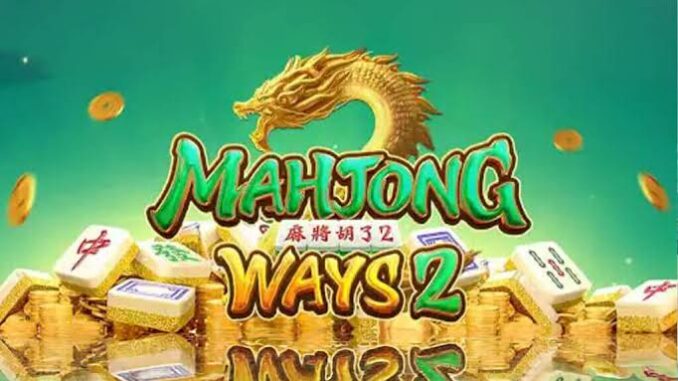
The online gaming industry has introduced countless titles that combine traditional cultural themes with modern digital technology. Among these games, Mahjong Ways stands out for its distinctive tile-based design, cascading symbols, multiplier mechanics, and Chinese-inspired atmosphere.
Developed by PG Soft, Mahjong Ways takes inspiration from the traditional Chinese game of Mahjong while introducing the mechanics of a contemporary video slot. Its combination of detailed graphics, recognizable symbols, and interactive features distinguishes it from conventional reel-based games.
Although the game incorporates several innovative elements, its outcomes remain dependent on chance. Understanding its structure, mathematical principles, and features can provide a clearer perspective on how the game operates.
What Is Mahjong Ways?
Mahjong Ways is an online video slot developed by PG Soft, also known as Pocket Games Soft. The game draws inspiration from traditional Mahjong, incorporating familiar tiles and decorative elements into a digital gaming environment.
Unlike traditional Mahjong, which requires strategic thinking and interaction between participants, Mahjong Ways operates through randomly generated outcomes.
The game features five reels, cascading symbols, wild transformations, multipliers, and a free-spin feature. These elements work together to create a dynamic gaming experience that differs from traditional slot machines.
Its visual identity is heavily influenced by Chinese culture, with green and golden tiles, traditional characters, and decorative backgrounds contributing to its recognizable appearance.
The Cultural Inspiration Behind Mahjong Ways
Traditional Mahjong originated in China and has become a widely recognized tile-based game across Asia and other parts of the world.
The original game typically involves four players who draw and discard tiles while attempting to complete specific combinations. Success depends on observation, strategic decisions, and chance.
Mahjong Ways adapts the visual characteristics of this traditional game without reproducing its original rules.
Bamboo symbols, Chinese characters, circular patterns, and traditional colors help establish a connection between the digital slot and its cultural inspiration.
This approach demonstrates how game developers can incorporate historical entertainment concepts into contemporary digital products while creating entirely different gameplay mechanics.
How Does Mahjong Ways Work?
Mahjong Ways uses a five-reel structure with a ways-to-win system rather than conventional fixed paylines.
Qualifying combinations are formed when matching symbols appear on consecutive reels, beginning from the leftmost reel, according to the game’s rules.
When a winning combination occurs, the corresponding symbols disappear from the playing area. New symbols then fall into the available positions, potentially creating additional combinations.
This cascading process continues until no further qualifying combinations appear.
The outcome of each round is determined by the game’s random number generator and mathematical model. Players cannot control which symbols appear or predict when particular combinations will occur.
Main Features of Mahjong Ways
Several gameplay mechanics contribute to the distinctive structure of Mahjong Ways.
Cascading Symbols
The cascading system replaces winning symbols with new tiles during the same game round.
Instead of ending immediately after the initial combination, a round may continue through multiple cascades.
This mechanic creates additional animations and potential combinations without requiring a separate wager for each cascade.
However, the possibility of consecutive combinations does not eliminate the game’s mathematical house edge.
Increasing Multipliers
Mahjong Ways incorporates multipliers that can increase during consecutive qualifying cascades.
These multipliers affect the value of eligible combinations according to the game’s predetermined rules.
The multiplier system is designed to introduce variation between individual rounds. Some rounds may end without additional cascades, while others may continue through several stages.
Golden Tile Transformations
Golden tiles are among the game’s most recognizable visual features.
Under qualifying conditions, certain golden symbols can transform into wild symbols after participating in winning combinations.
These transformations introduce additional possibilities within the cascading system while remaining governed by the game’s random outcomes.
Wild Symbols
Wild symbols substitute for eligible regular symbols to help complete qualifying combinations.
Their appearance and functionality are integrated into the game’s tile-based design.
Wild symbols do not necessarily substitute for every special symbol, and their specific limitations are explained in the game rules.
Free Spins
Mahjong Ways includes a free-spin feature associated with scatter symbols.
During this feature, the game introduces a different multiplier structure, creating variation from the standard gameplay environment.
Free spins remain part of the overall gambling product and do not guarantee a positive financial outcome.
Understanding Mahjong Ways Symbols
The symbols used in Mahjong Ways are inspired by traditional Chinese Mahjong tiles.
Different symbols have different payout values, depending on their position, frequency, and qualifying combinations.
Common visual elements include:
- Green bamboo tiles
- Circular Mahjong symbols
- Traditional Chinese characters
- Golden decorative tiles
- Wild symbols
- Scatter symbols
The combination of traditional imagery and modern animations gives the game a recognizable visual identity.
Players can examine the paytable to understand the specific functions and values associated with individual symbols.
Mahjong Ways RTP and Volatility
Return to Player, commonly known as RTP, is an important concept when discussing online slot games.
RTP represents the theoretical percentage of total wagers returned to players over a very large number of game rounds.
Mahjong Ways is commonly listed with a theoretical RTP of 96.92%, although configurations may vary between operators and game versions.
At that RTP, the theoretical house edge is 3.08%.
This does not mean that an individual wagering $100 will necessarily receive $96.92 in return. Short-term outcomes can differ significantly from theoretical averages.
Volatility is another important consideration. It describes how frequently payouts tend to occur and how their values are distributed.
Higher-volatility games generally produce less frequent but potentially larger payouts, while lower-volatility games tend to distribute smaller payouts more frequently.
Neither RTP nor volatility can predict the outcome of an individual gaming session.
Mahjong Ways vs. Mahjong Ways 2
Following the original game’s release, PG Soft introduced Mahjong Ways 2, expanding upon the established theme and gameplay concept.
Both titles share several characteristics but offer different visual presentations and mathematical configurations.
| Feature | Mahjong Ways | Mahjong Ways 2 |
|---|---|---|
| Developer | PG Soft | PG Soft |
| Theme | Traditional Mahjong | Traditional Mahjong |
| Reels | 5 | 5 |
| Ways to win | 1,024 | 2,000 |
| Cascading symbols | Yes | Yes |
| Multipliers | Yes | Yes |
| Free spins | Yes | Yes |
| Commonly listed RTP | 96.92% | 96.95% |
Although Mahjong Ways 2 introduces a different reel configuration and additional visual refinements, both games remain dependent on randomized outcomes.
A greater number of ways to win does not automatically translate into greater profitability.
Mobile Compatibility and Gaming Technology
PG Soft develops games with mobile compatibility as a central consideration.
Mahjong Ways uses modern browser-based technology, allowing compatible versions to operate across smartphones, tablets, and desktop computers.
Responsive interfaces adjust to different screen sizes, while optimized graphics support consistent visual performance.
The mobile-oriented design also incorporates touchscreen controls, animated tile movements, and simplified navigation.
However, the device used to access the game does not influence its underlying mathematical probabilities.
Whether someone uses a smartphone or desktop computer, outcomes remain governed by the game’s software.
Can Mahjong Ways Results Be Predicted?
One of the most common misconceptions surrounding Mahjong Ways involves the existence of predictable winning patterns.
Online discussions sometimes promote specific playing schedules, spin sequences, or wager adjustments as methods of improving results.
However, standard randomized slot games do not operate according to predictable winning schedules.
Previous unsuccessful rounds do not guarantee that a successful round is approaching. Similarly, receiving a significant payout does not establish a reliable pattern for future outcomes.
Random number generators are designed to produce unpredictable results according to predetermined mathematical probabilities.
Understanding this principle is essential for avoiding unrealistic expectations about gambling outcomes.
Exploring Mahjong Ways Demo Versions
Demonstration versions of Mahjong Ways may be available through authorized gaming platforms.
These versions typically use virtual credits instead of real money, allowing users to examine the game’s interface, animations, symbol transformations, and bonus mechanics without directly wagering money.
Demo versions can provide an opportunity to understand the differences between Mahjong Ways and other tile-themed slots.
Nevertheless, demonstration results should not be interpreted as predictions of future real-money outcomes.
The mathematical configuration of a demonstration version may also differ from that of a particular real-money implementation.
Responsible Gaming and Financial Awareness
Mahjong Ways is a gambling product whenever real money is involved. Despite its colorful graphics and interactive mechanics, it carries the possibility of financial loss.
Responsible gaming involves maintaining realistic expectations, establishing spending limits, and avoiding the use of money intended for essential expenses.
Attempting to recover previous losses through additional gambling can increase financial difficulties.
Players should also recognize that animated celebrations and frequent symbol transformations do not necessarily indicate financial success.
Anyone experiencing difficulty controlling their gambling behavior should consider taking a break, using self-exclusion tools, or seeking professional assistance.
Conclusion
Mahjong Ways combines traditional Chinese cultural imagery with modern online slot technology. Its cascading symbols, golden tile transformations, increasing multipliers, and free-spin mechanics create a distinctive gaming format.
The introduction of Mahjong Ways 2 further demonstrates how developers can expand upon established concepts through alternative reel configurations and updated visual designs.
Understanding RTP, volatility, random number generators, and symbol mechanics provides valuable insight into how these games function.
However, no playing technique or predetermined pattern can guarantee successful outcomes. Mahjong Ways remains a game of chance, and maintaining realistic expectations is essential when approaching any form of gambling entertainment.
Leave a Reply